
21. Don’t keep touching the lump.
It can be tempting to repeatedly press or squeeze a new lump.
Try not to do it.
Constant contact can:
- Irritate the skin
- Increase inflammation
- Introduce bacteria
- To make a lump softer
- It makes it difficult to know if it’s really changing.
Instead, observe it and note any changes.
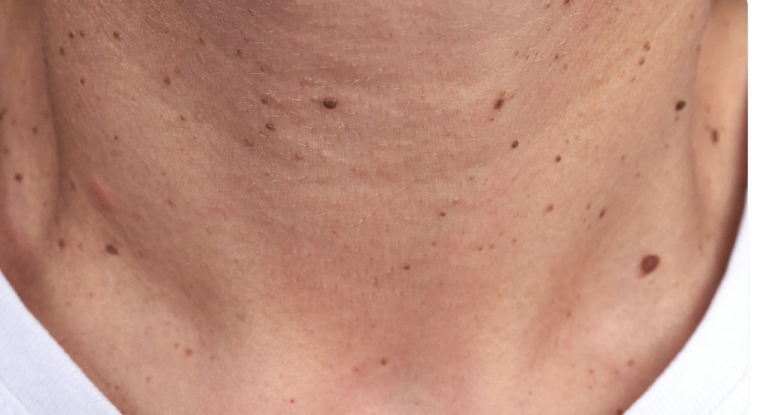
22. If it is a lump on the skin, take a picture of it.
If the lump is visible on the skin, taking a clear photograph can help you observe changes over time.
You can compare:
- Size
- Color
- Shape
- Redness
- Changes in the surface
A photograph can also be helpful when discussing the problem with a healthcare professional.
Don’t rely solely on photographs for diagnosis.
23. Do not attempt to remove a lump yourself.
Avoid cutting, burning, piercing, or squeezing any unexplained lumps on the neck.
The neck contains important blood vessels, nerves, glands, and other structures.
Even a seemingly superficial lump may not be what you think it is.
A doctor can determine if the extraction is necessary and what the safest way to perform it is.
24. When does a lump in the neck constitute an emergency?
Most minor neck bumps are not an emergency.
However, seek urgent medical attention if the swelling causes:
- Difficulty breathing
- Severe difficulty swallowing
- Swelling that increases rapidly
- Significant swelling of the face or neck
- Symptoms of severe infection
An infection that progresses rapidly can become serious and require immediate treatment.
25. What could a doctor do?
When evaluating a lump in the neck, a healthcare professional may ask:
- When did you first notice it?
- Has it changed size?
- Is it painful?
- Have you been sick lately?
- Do you have dental problems?
- Have you experienced any weight loss?
- Do you have a fever or night sweats?
- Do you have difficulty swallowing?
- Have you noticed any changes in your voice?
- Do you smoke or use tobacco?
- What medications are you taking?
They can examine the lump and the surrounding areas.
Depending on the results, further testing may include:
- blood test
- Ultrasound
- Imaging studies
- Fine needle aspiration
- Other tests when clinically appropriate.