

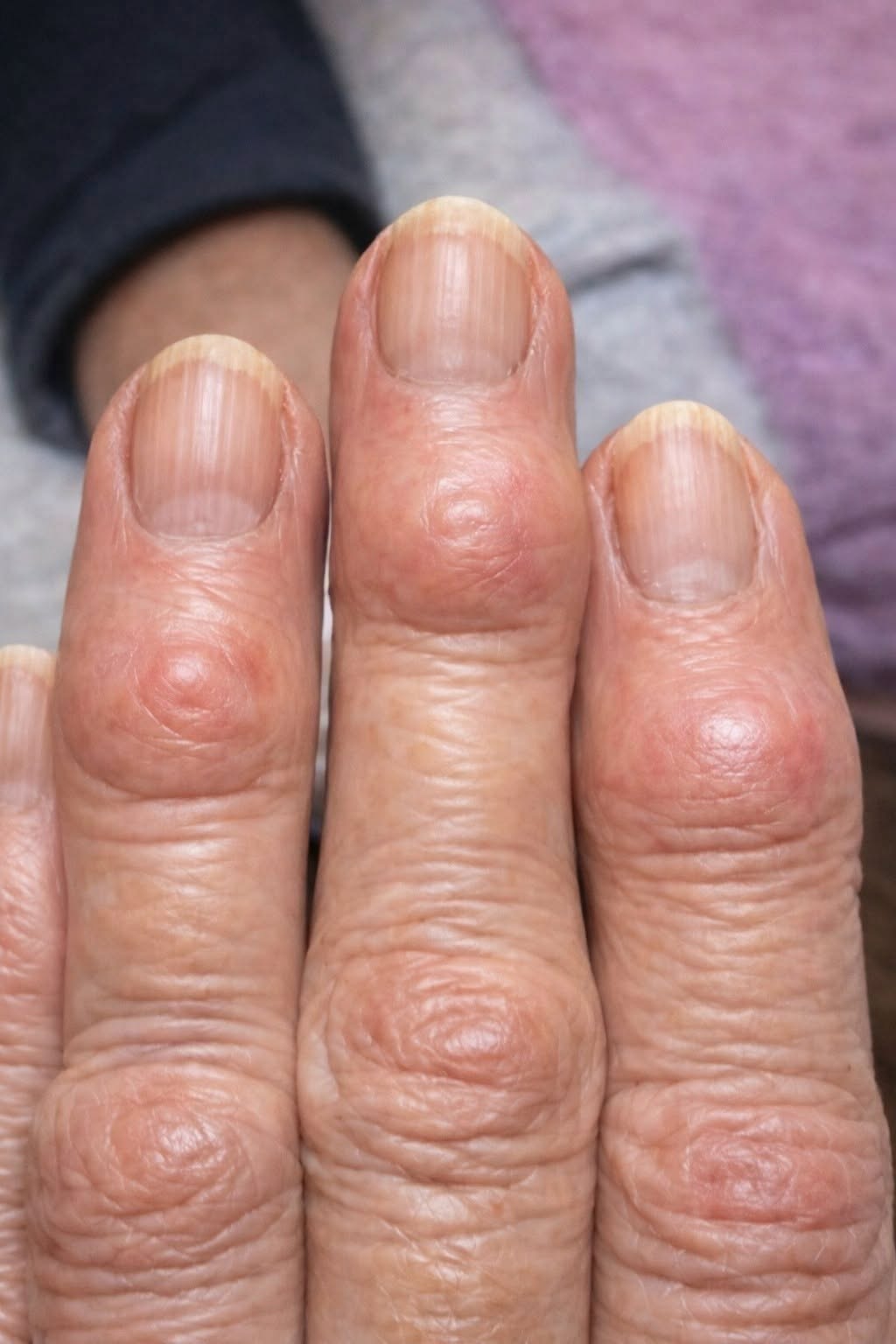
1. Common Warts Can Create Firm, Rough Bumps
One of the first possibilities to consider is a common wart.
Warts are caused by certain types of human papillomavirus (HPV), which infect the outer layer of the skin.
Common warts frequently appear on the hands and fingers.
They can look like:
- Small, firm bumps
- Rough or grainy growths
- Flesh-colored or grayish spots
- Raised areas with an uneven surface
- Groups of bumps appearing close together
Sometimes a wart begins as a tiny spot that becomes more noticeable over time.
A wart can also spread from one area of the hand to another, particularly when the skin is repeatedly scratched, picked, or irritated.
Some warts eventually disappear without treatment, while others can persist for months or even years.
If you’re unsure whether a bump is a wart, avoid picking or cutting it yourself.
2. Calluses Can Look Like Hard Bumps
Not every hard area on the hand is a growth.
Sometimes it’s simply thickened skin.
Calluses develop when the skin is repeatedly exposed to friction or pressure.
For example, people who frequently use:
- Hand tools
- Gym equipment
- Gardening equipment
- Musical instruments
- Sports equipment
- Industrial equipment
may develop areas of thickened skin.
The skin essentially responds to repeated mechanical stress by becoming thicker.
Calluses are usually not dangerous.
They may feel hard, rough, or slightly raised compared with the surrounding skin.
The biggest clue is often their location.
If the bump appears exactly where your hand repeatedly experiences friction or pressure, a callus becomes more likely.