

14. Don’t Try to Remove a Bump Yourself
When people discover an unwanted bump, the temptation can be strong.
They may try to:
- Cut it off
- Puncture it
- Burn it
- Freeze it with inappropriate products
- Squeeze it
- Dig underneath the skin
This can create problems.
Breaking the skin can introduce bacteria and lead to infection.
It can also cause bleeding, scarring, nerve damage, or injury to nearby structures.
And if the bump is something other than a wart or callus, removing it yourself may make proper diagnosis more difficult.
When in doubt, get it examined.
15. Pay Attention to Where the Bumps Appear
The location of a bump can provide important clues.
On the fingertips
Consider warts, cysts, injuries, or thickened skin.
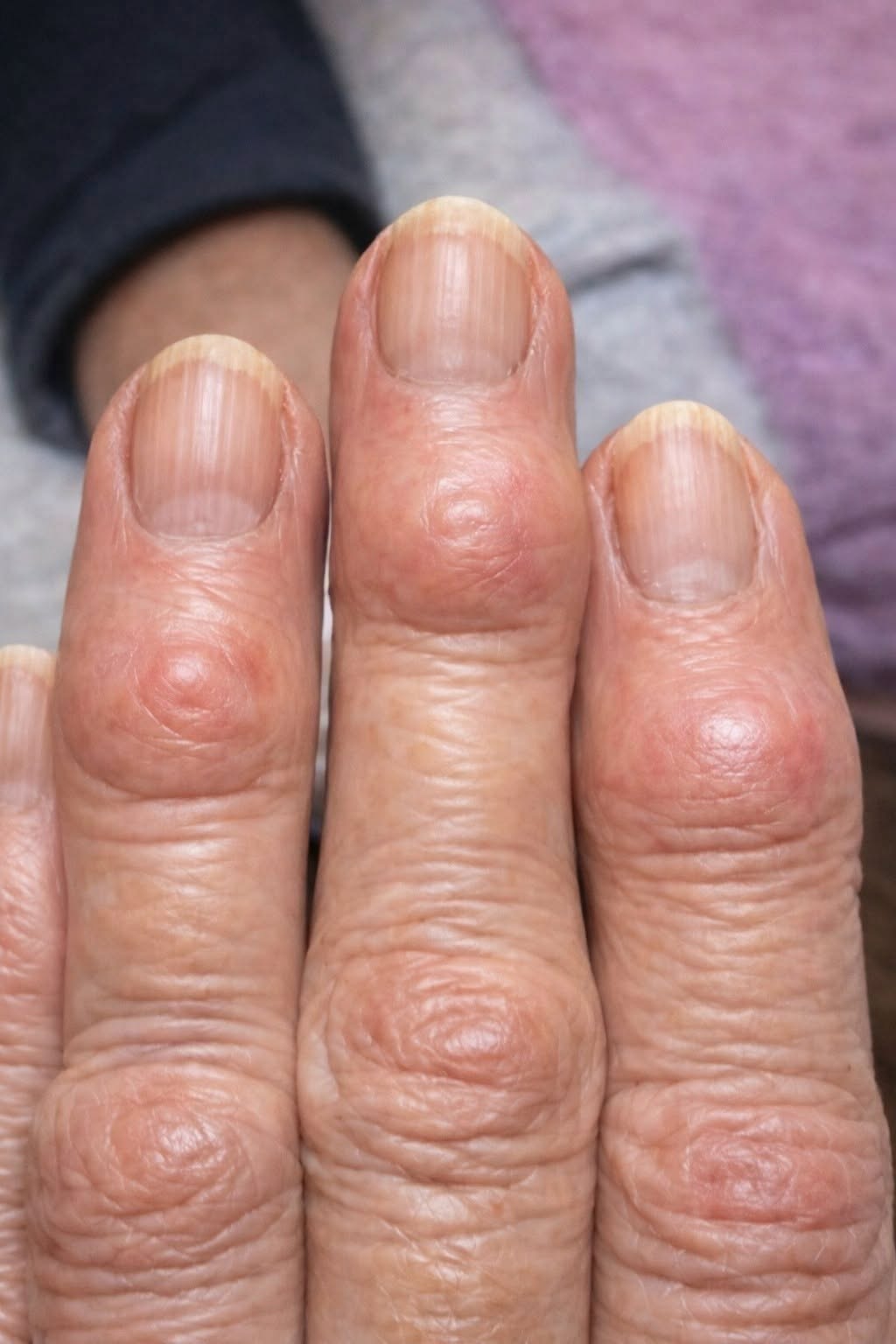
Around the finger joints
Arthritis-related changes, cysts, and other joint-related conditions may be possible.
On the palms
Calluses, Dupuytren’s disease, warts, and other conditions can occur.
Near the nails
Digital mucous cysts and other skin conditions may be possibilities.
Along areas exposed to friction
Calluses or thickened skin become more likely.
Location alone cannot provide a diagnosis, but it can help a healthcare professional narrow down the possibilities.
16. Are the Bumps on One Hand or Both?
Another useful clue is whether the changes are symmetrical.
If bumps appear on both hands in similar locations, repeated friction, certain joint conditions, or systemic factors may be worth considering.
If a single unusual bump appears on one hand after an injury, a localized cause may be more likely.
Again, this isn’t a diagnostic rule.
It’s simply another piece of information.
17. Do the Bumps Change Over Time?
Try to remember when you first noticed the bump.
Was it:
- There yesterday?
- Present for several weeks?
- Slowly getting larger?
- Staying exactly the same?
- Appearing and disappearing?
- Becoming harder?
- Becoming painful?
Taking a photograph when you first notice an unexplained bump can be surprisingly useful.
If you take another photograph several weeks later, you can compare the two.
This can help you determine whether the lesion is actually changing.
18. Don’t Assume Every Bump Is a Sign of a Serious Disease
The word “terrifying” in headlines can make ordinary skin changes sound much more alarming than they actually are.
The reality is that many bumps on the hands are benign.
Warts, calluses, cysts, scars, and arthritis-related changes are all possible explanations.
The purpose of paying attention isn’t to scare yourself.
It’s to recognize when something is unusual enough to deserve evaluation.
A healthy approach is:
Notice it → observe it → avoid damaging it → seek professional advice if it persists or changes.
When Should You See a Doctor?
Consider getting a bump examined if:
- You don’t know what caused it.
- It doesn’t go away.
- It continues getting larger.
- Several new bumps are appearing.
- It becomes painful.
- It bleeds.
- It changes color or shape.
- It interferes with finger movement.
- You experience numbness or weakness.
- The surrounding skin becomes red or warm.
- There is pus or other drainage.
- You have a weakened immune system.
- The lesion looks significantly different from other spots on your skin.
A dermatologist, primary-care physician, or other qualified healthcare professional can examine the lesion and determine whether further testing is necessary.