
13. Add Them to a Worm-Composting System Carefully
People who practice vermicomposting sometimes use finely crushed eggshells as a source of calcium and grit.
Worms don’t “eat” eggshells in the same way they consume food scraps.
Instead, finely ground mineral material can become part of the composting environment.
If you’re using a worm bin, the shells should be:
Clean, dry, and finely crushed.
Avoid adding large quantities.
And remember that worms need an appropriate mixture of organic materials, moisture, airflow, and bedding to thrive.
Eggshells are only a small component of the system.
14. Eggshells Can Provide Calcium—but Be Careful About Eating Them
This is where eggshell discussions become much more complicated.
Because eggshells contain a large amount of calcium carbonate, some people grind them into powder and consume them as a calcium supplement.
Technically, eggshell powder can contain a significant amount of calcium.
But that doesn’t mean you should simply collect shells from your kitchen, grind them, and start eating them.
Raw eggshells can potentially carry Salmonella and other microorganisms.
Improper preparation can therefore create a food-safety risk.
If someone is considering eggshell-derived calcium, it is much safer to discuss the idea with a healthcare professional and use a properly manufactured, tested product rather than relying on homemade preparations.
15. Don’t Assume Eggshell Powder Will Strengthen Your Bones
You’ve probably seen claims that eating powdered eggshells can dramatically improve bone health.
The reality is more complicated.
Calcium is important for maintaining normal bones, but bone health depends on many factors, including:
- Calcium intake
- Vitamin D
- Protein
- Physical activity
- Hormonal health
- Age
- Genetics
- Overall nutrition
Simply consuming more calcium isn’t necessarily better.
Too much calcium can also create problems in some people.
If you’re concerned about osteoporosis or calcium deficiency, the right approach is to discuss your nutritional needs with a healthcare professional rather than experimenting with homemade eggshell powder.
16. Eggshells Aren’t a Miracle Pest Control
Another popular gardening claim is that eggshells can automatically keep every slug and snail away from your plants.
The evidence for this simple hack is not particularly convincing.
Sharp eggshell fragments are sometimes claimed to create an uncomfortable barrier for soft-bodied pests.
In practice, the effectiveness can vary considerably.
If your garden has a serious pest problem, relying entirely on eggshells isn’t a dependable strategy.
They can still be used as part of your gardening routine, but don’t expect them to function as a guaranteed natural pesticide.
17. Don’t Put Eggshells Down the Garbage Disposal
This is an important household warning.
You may hear that eggshells can sharpen garbage-disposal blades.
That’s not a good reason to put them down the disposal.
Small fragments can potentially accumulate and contribute to plumbing or disposal problems rather than magically sharpening the blades.
A better option is:
Compost them or throw them away properly.
Your plumbing will thank you.
18. Don’t Use Eggshells to Scrub Everything
Eggshells are abrasive.
That can be useful in certain situations.
But abrasiveness can also cause damage.
Avoid experimenting with eggshell scrubbing on:
- Nonstick pans
- Fine glassware
- Stainless surfaces that scratch easily
- Polished stone
- Delicate ceramics
- Electronics
Natural doesn’t automatically mean gentle.
Always consider the surface before using any abrasive material.
How to Prepare Eggshells for Reuse
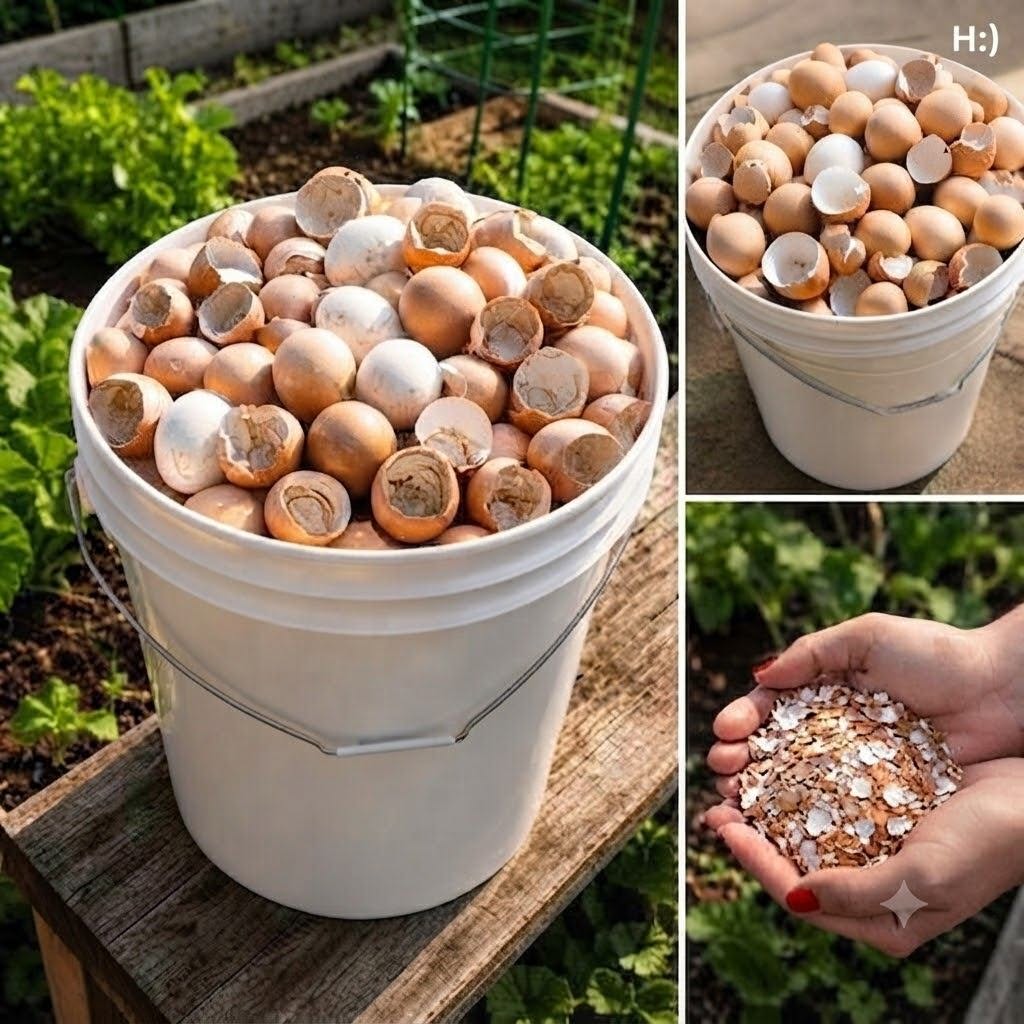
If you’re planning to reuse eggshells for gardening, crafts, or composting, preparation is simple.
Step 1: Rinse Them
Remove remaining egg material.
Step 2: Dry Them Thoroughly
Allow the shells to dry completely.
You can air-dry them or use gentle heat if appropriate.
Step 3: Crush Them
Break them into smaller pieces.
For composting and gardening, smaller particles generally break down more readily.
Step 4: Store Them Properly
Keep dried shells in a clean, dry container until you’re ready to use them.
If you’re preparing shells for any potential food use, don’t rely on casual kitchen cleaning. Food-safety requirements are much stricter.
What About the Thin Membrane Inside the Shell?
If you’ve ever cracked an egg carefully, you’ve probably noticed the thin membrane attached to the inside.
This membrane contains proteins and other compounds, which has led to interest in potential nutritional and supplement applications.
However, that doesn’t mean eating raw eggshell membranes from kitchen waste is a proven treatment for joint problems or other conditions.
Commercial eggshell-membrane supplements are processed and standardized differently from homemade eggshells.
So it’s important not to assume the two are equivalent.