
2. They’re Marking You as Safe
Cats are incredibly scent-oriented. They have scent glands on their cheeks, chin, forehead, and the base of their tail that release pheromones—chemical signals that help them communicate safety, territory, and familiarity.
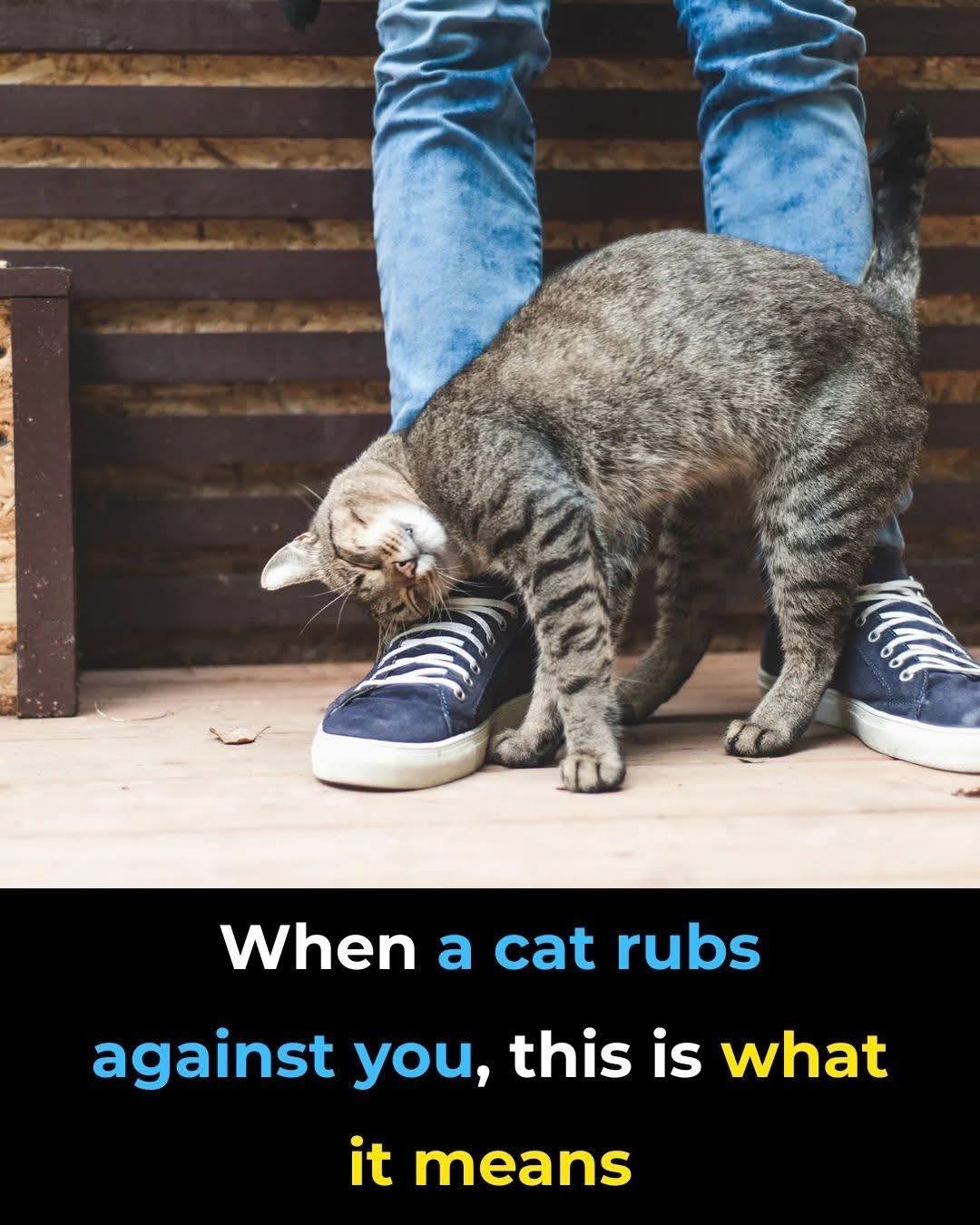
When your cat rubs their head or body on you, they’re marking you with their scent. To them, this is a comforting way to say, “You belong in my circle.” These pheromones act as emotional anchors—reminding your cat that you are part of their safe space.
However, these scents fade over time, so your cat will need to “reapply” them by rubbing against you again. Cats living in multi-cat households do the same thing with each other to create a shared family scent, which helps them recognize who’s part of the group and who’s an outsider.
3. They Want Your Attention
Sometimes rubbing is your cat’s polite (or not-so-polite) way of saying, “Hey, notice me!”
They might do it when they want:
-
Fuss or petting
-
Food or treats
-
Playtime or stimulation
-
Access outdoors
If you consistently respond by giving them what they want, they’ll quickly learn that rubbing works—and they’ll keep doing it. That’s fine for affection or play, but be cautious about giving in every time they demand food. Instead, stick to their daily allowance and redirect attention-seeking to play or cuddles to help prevent weight gain.
If your cat is rubbing against you because they want to go outside, you might consider investing in a cat flap. Otherwise, be prepared to serve as your cat’s personal doorman on demand!
4. They’re Ready to Mate
Unneutered female cats in heat (their reproductive cycle) can become unusually affectionate. They may rub against you, furniture, or other animals far more than usual, often accompanied by restlessness, increased vocalization, and tail-lifting behavior to signal their readiness to mate.
This phase can be stressful for both cat and owner, but the behavior is completely natural. The best way to prevent unwanted mating behavior—and protect your cat’s health—is to have them spayed or neutered.