
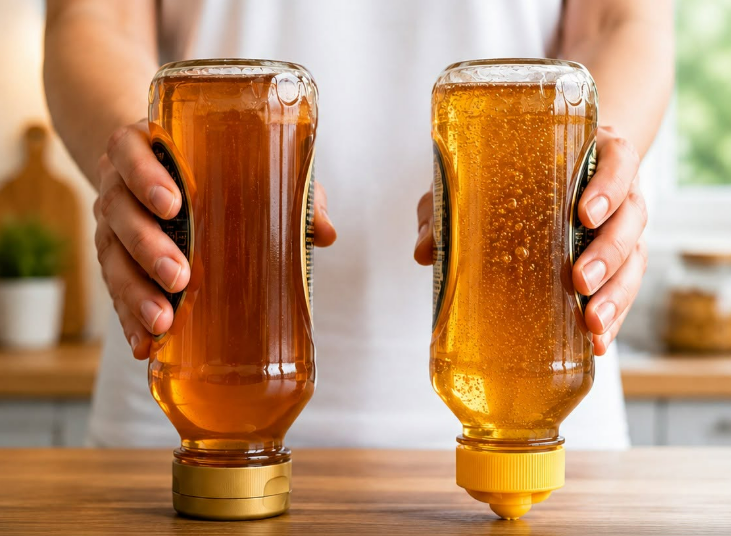
Raw honey may be thicker than processed honey.
Warm honey flows faster than cold honey.
Different flower varieties naturally produce different textures.
Other Common Honey Tests
Many consumers use additional at-home methods to evaluate honey quality.
The Spoon Test
Pure honey often flows slowly from a spoon and forms a continuous stream rather than dripping quickly.
The Water Test
Some people place a spoonful of honey into a glass of water.
Thicker honey may settle at the bottom before dissolving, while heavily diluted honey may disperse more rapidly.
Crystallization
Many people mistakenly believe crystallized honey is fake.
In reality, natural honey often crystallizes over time due to its glucose content. Crystallization is usually considered a normal characteristic of genuine honey.
Why Fake Honey Is a Concern
Adulterated honey may contain:
Added sugar syrups
Corn syrup
Artificial sweeteners
Excess water
These additions can alter the flavor, texture, and nutritional profile of the product.
Because counterfeit honey can be difficult to identify visually, many experts recommend purchasing honey from trusted producers and reputable brands.
The Most Reliable Way to Verify Honey